V. “You shall not kill.
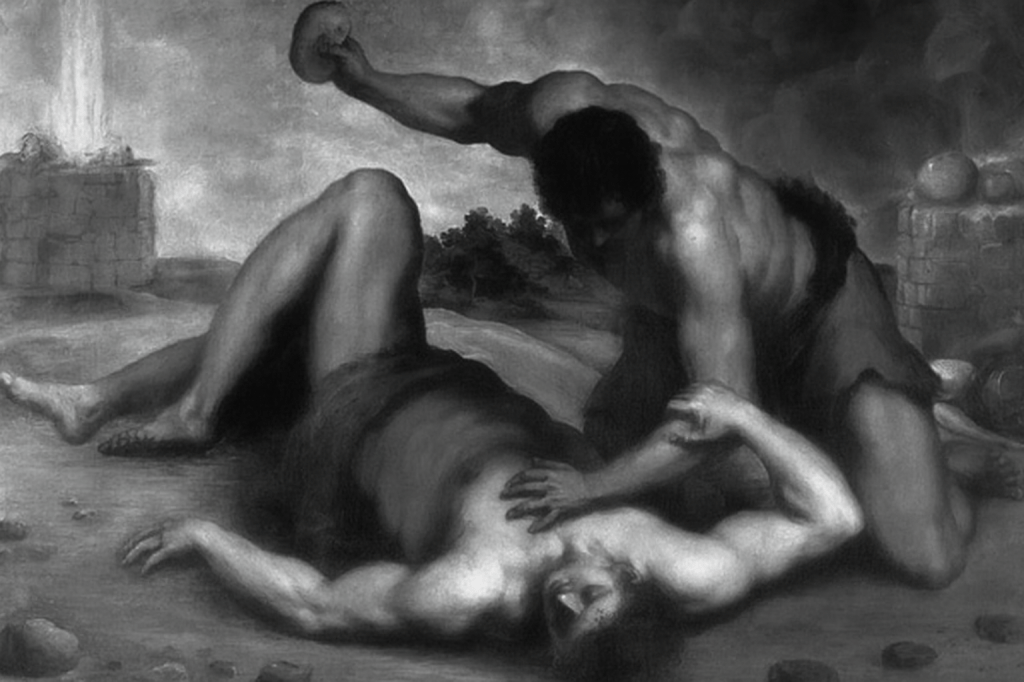
Download from biblestudytools.com
Could Adam’s seed envision paradise
while jealous rage created primal sin
of mortal against mortal Cain devised,
through frenzied hand, to slay his next-of-kin?

And do You sanction all the havoc raised
down through the sands of time to understand
Your wrath and retribution when You gaze
on Abel’s lifeless form in desert sand?

“You shall not kill!” at first glance, seemed to be
an understatement easy to allow
before my reason festered, to foresee
Cain’s pestilence progressing to my vow.

Does circumstance revise Your fifth decree
that You might compromise with such as me;
reversing Your design at Babel’s tower,
commuting sentence to safeguard the hour
with five, then garbled much the same
as languages from Babel came
to teach all tribes of errant man
the why of your reflexive hand
in view of my acute propensity
for justice with complete intensity?

When honor wins; through life blood has been spilled
can scoring be refitted, or instilled,
within the arch of none and ten
to guard my key to heaven in
an altered numeric design
accommodating 0 through 9?

If, in context, I choose amorphism
evolving from commitment to relate
to Malta’s Knights against implosive schism
what pattern, then, would YOU choose to create?
Would Wisdom’s eyes devise an algorism
by calculating zero to negate
eyes reflected in cold prisms?
Else how can Cain atone, or compensate?
| The Curator’s Notes: This is the poem. The one where the Air Force wife married to a man trained to deliver nuclear holocaust wrestles with “Thou shalt not kill” and asks God directly: Does circumstance revise Your commandment? Can you compromise with someone like me? This is brutal, honest, intellectually rigorous, and theologically daring. She’s not evading—she’s confronting head-on. This poem is rooted in unflinching moral honesty. It offers no comfort, no resolution, no escape. Just the question: “Else how can Cain atone, or compensate?” |
 The Coping Stones