“You shall not take the name of the LORD
your God, in vain.  For the LORD will not
leave unpunished him who take His name in
vain.”
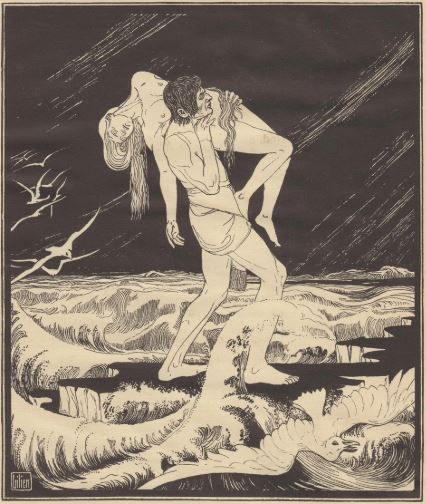
| GENESIS Chapter 7 17 And the flood was forty days upon the earth; the waters increased, and bore up the ark and it was raised up above the earth. 21 And all flesh died that moved upon the earth, both of fowl, and of cattle, and of beast, and of all creeping things that creep upon the earth; and all men. 24 And the waters prevailed upon the earth a hundred and fifty days. |
Ephraim Moses Lilien (1874-1925)
Babel’s tongues!
Trapped by hoarse ejaculation,
subdue anger spawning profane phrases
devil designed in coarse retaliation
of endless hide-and-seek within his mazes,
designed by God that man may mediate.

Poetic license is the devil’s game
when skeptics bastardize the gift of speech
in order to persuade man to defame
God’s message in false principles they teach.
What message, then, do they communicate?

By definition, vain means “to no end”
and, coupled, God and damn make no pretense
at clarity, that mankind comprehend
the magnitude of slanderous offense
to Him through whom all thoughts originate.

When Lucifer’s first curse upon His name
invoked the second Sinai decree,
God’s message stated clearly man refrain
from exile into hell through blasphemy.
Yet, heedless, man explores that guarded gate.
| The Curator’s Notes: This poem tackles the Second Commandment, not just taking God’s name in vain, but through the lens of language itself: its power, its corruption, and humanity’s persistent misuse of the gift of speech. This poem is more directly confrontational than the one the poet delivered for the First Commandment. She’s calling out specific contemporary behavior (casual profanity, skeptical sophistry) rather than using extended metaphor. The urgency is palpable: people are blindly “exploring the guarded gate” of hell. |
 The Coping Stones